

Dwarka Expressway Impact: How It is Transforming Gurgaon Real Estate
October 8th, 2025
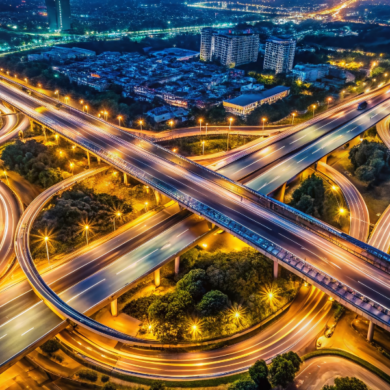
Dwarka Expressway impact Gurgaon real estate signifies a major transformation – catalysing growth in housing, business, and infrastructure – while reinforcing long-term investor confidence across the city.
Dwarka Expressway impact Gurgaon real estate has been significant, with the arterial route emerging as one of the most defining developments in India’s property landscape. This ambitious infrastructure corridor is now complete, reshaping the way investors and homebuyers view the region.
As connectivity improves between Delhi, Gurgaon, and major business districts, this expressway has triggered new demand across residential and commercial segments. Property values along the stretch have seen consistent growth, supported by modern urban planning and upgraded civic infrastructure.
Dwarka Expressway impact Gurgaon real estate reflects a shift towards future-ready living driven by accessibility, investment confidence, and large-scale urban transformation.
Table of Contents
Game-changing Infrastructure
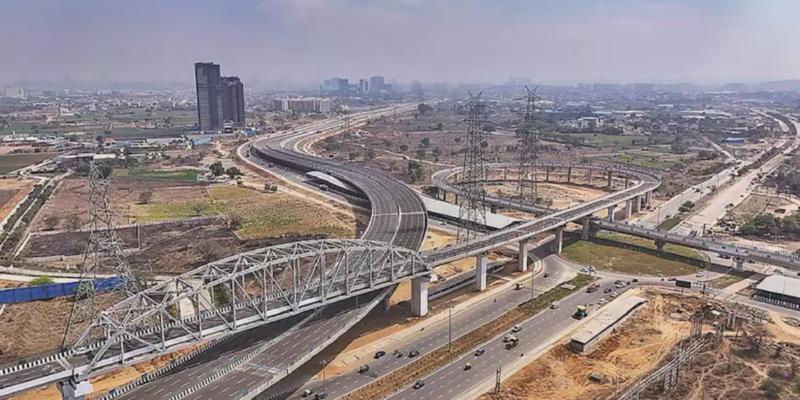
Stretching across a high-growth corridor that links South Delhi to New Gurgaon, this 29km expressway is designed to decongest traffic and create direct access to IGI Airport, Diplomatic Enclave, and emerging business districts. Its 8-lane, access-controlled design ensures faster commutes and smoother intercity travel, with Dwarka Expressway impact Gurgaon real estate evident in rising demand for both residential and commercial developments along the corridor.
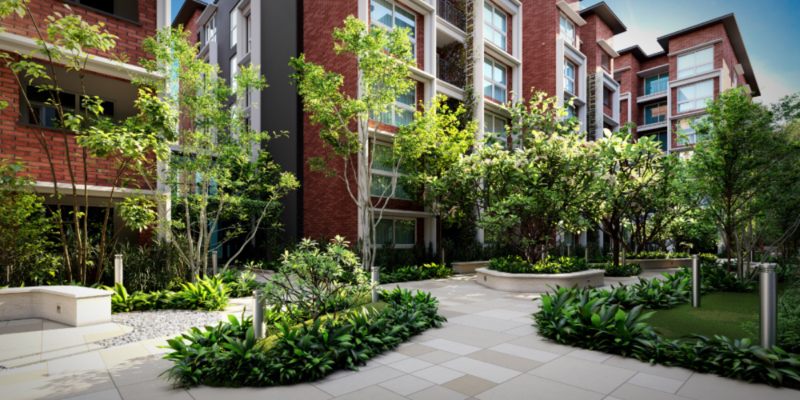
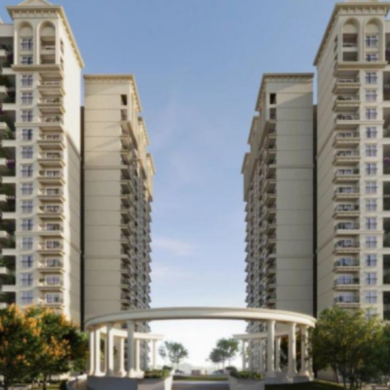
At the heart of this transformation lies SOBHA Altus in Sector 106, ultra-luxe 4 & 5BHK apartments ranging from 2870 sq ft to 3853 sq ft. SOBHA Aranya at Karma Lakelands offers 3 & 4BHK eco-luxe residences spanning 2836 to 4285 sq ft, reflecting the developer’s engineering excellence.
The strategic positioning of Dwarka Expressway in Delhi NCR places it at the centre of new urban expansion, connecting major employment hubs and unlocking large-scale residential and commercial potential.
Transformative Impact on Real Estate Market
A. Property Price Appreciation Patterns
Dwarka Expressway impact Gurgaon real estate market has been profound, triggering a new wave of growth across sectors. With improved infrastructure and seamless connectivity, the region has evolved from an emerging zone into one of NCR’s most dynamic property corridors.
Prices along the expressway have almost doubled in 4 years, reflecting rapid appreciation and growing buyer demand. Developers are launching premium projects, while homebuyers seek long-term value appreciation and upgraded lifestyle infrastructure that solidifies Gurgaon’s position as a thriving property destination.
Property prices in this corridor were relatively low, with limited buyer activity and modest developer interest. The landscape began to change as construction gathered pace, bringing large-scale infrastructure upgrades and new attention to this stretch of the city. As connectivity improved and progress was visible, the area emerged as a leading investment corridor – attracting developers, buyers, NRIs, and HNIs. The Dwarka Expressway impact Gurgaon real estate growth narrative is now defined by rapid transformation, rising demand, and sustained appreciation trends.
B. Redistribution of Location Premium
For years, Golf Course Road and MG Road dominated the city’s premium property map. However, the completion of the expressway has shifted this focus towards newer sectors such as 99-113, where large-scale residential and commercial developments are reshaping the city’s growth pattern. This shift highlights the evolution from traditional centres to future-ready zones.
Emerging areas along the corridor – including Sectors 104, 106, and 109 – have seen steady value migration as infrastructure upgrades, metro connectivity, and luxury projects draw investor attention.
Dwarka Expressway impact Gurgaon real estate has ensured that these emerging sectors are new investment hotspots, with strong appreciation and lifestyle-driven urban expansion expected in the near future.
Sector-wise Impact Analysis
Dwarka Expressway impact Gurgaon real estate extends across multiple sectors, each witnessing distinct phases of growth and transformation. From luxury residential clusters to thriving commercial hubs and logistics zones, the corridor has triggered a balanced ecosystem of development. As infrastructure matures, every sector along this route is contributing to the city’s emergence as a more connected, investment-driven urban centre.
A. Residential Real Estate Transformation
Housing trends are evolving quickly, through configuration demand changes. Developers are responding to buyer preference for flexible plans – such as 3BHK + study, dual-entry units, or built-in workspaces.
Growth in the luxury segment marks another transformation. In 2025, Gurgaon accounted for 91% of NCR’s ₹5 cr+ home sales. Luxury and ultra-luxury supply together captured 82% of new launches in NCR during Q2 2025. Buyers now demand premium finishes, high ceilings, and branded services.
Dwarka Expressway impact Gurgaon real estate is evident in steady expansion of the first-time buyer market. Mid-sized units (900-1200 sq ft) near this route are witnessing higher absorption, due to manageable budgets. Between 2020 and 2024, Dwarka Expressway property prices nearly doubled, reflecting the area’s growing residential appeal.
Family housing preferences are also shifting. Demand is tilting towards homes with larger layouts, dedicated children’s zones, and common green spaces. In the expressway corridor, 4BHK flats in Gurgaon comprised a significant share of absorption in recent projects.
B. Commercial Real Estate Boom
Dwarka Expressway impact Gurgaon real estate is clearly visible in the rapid surge of demand for Grade-A office spaces along the corridor, as major corporates continue to relocate to the city. In Q3 2025, net office leasing across India’s top 8 cities hit 16.3 million sq ft, up 35% year-on-year – with Gurgaon accounting for a substantial share.
Retail development opportunities have expanded, as consumption zones extend towards new growth belts. Delhi NCR recorded retail leasing of 0.5 million sq ft in Q3 2025, with Gurgaon contributing 68% of that total.
Dwarka Expressway impact Gurgaon real estate is driving a new wave of mixed-use developments that integrate office, retail, and residential spaces within unified campuses. In New Gurgaon, developers are combining workspaces, high-street retail, and residences to create cohesive ecosystems that enhance convenience and urban connectivity.
Corporate relocation trends favour newer corridors spurred by transport upgrades. Brookfield India REIT announced investment in commercial assets in Gurgaon, reflecting growing investor confidence and the steady shift of firms toward emerging zones.
C. Industrial and Logistics Growth
Expanding warehouse and logistics hubs highlight Dwarka Expressway impact Gurgaon real estate, as the corridor evolves into a major industrial and commercial zone driving business growth and employment opportunities. Delhi NCR recorded 6.6 million sq ft of industrial and logistics absorption in H1 2025, a 22.2% year-on-year rise, while Grade-A demand lifted rents by 5.3% in H1 2025 – which points towards sustained appetite tied to expressway-led connectivity.
Manufacturing unit interest has intensified with multiple clusters forming along the expressway. Enhanced cargo movement and easy linkage to IGI Airport have made the region a preferred base for light assembly and storage units.
Land value appreciation continues to mirror the pace of infrastructure expansion. This transformation aligns with Haryana’s industrial corridor development vision, reinforcing the city’s emergence as a logistics powerhouse.
Key Beneficiary Areas Along the Expressway
-
Sectors 99-109: New Growth Hub
These are evolving from previously underdeveloped stretches into a well-connected corridor. Internal roads, drainage networks, and power substations are nearing completion, accelerating urban development and residential activity in the area.
Many business parks and emerging tech campuses line this stretch, offering ready plug-and-play spaces for enterprises. Dwarka Expressway impact Gurgaon real estate is evident in firms seeking proximity to this route, for employee accessibility and stronger logistical connectivity.
Property trends in Sector 109 show average rates at ₹12,732 per sq ft, reflecting 6.7% annual rise. In the last 3 years, prices soared by 73.8%, indicating investor confidence.
Investment potential in the region remains strong. As infrastructure projects near completion and corporate demand rises, these sectors are poised to become key growth zones in the property landscape, reinforcing the area’s long-term value proposition.
-
New Gurgaon Expansion
This region is emerging as a major growth frontier, which is evident in Dwarka Expressway impact Gurgaon real estate. The master plan envisions cohesive development across Sectors 102-113 and 76-95, linked via 3 major highways: Delhi Mumbai National Highway NH48, Western Peripheral Expressway, and Dwarka Expressway. This planned clustering ensures that development benefits such as streamlined infrastructure rollouts and utility provision come into play early.
Modern infrastructure advantages distinguish New Gurgaon from older corridors. A new metro link is underway, connecting Millennium City Centre to Dwarka Expressway with 27 stations, promising seamless connectivity and decongestion.
Investment opportunities are rising. With 42,816 units launched between 2010 and 2024 along the corridor, and new launches continuing, capital inflows remain strong. Long-term growth prospects look positive. As infrastructure matures and expressway influence deepens, New Gurgaon will command premium valuations and sustained demand.
-
Manesar Connectivity Benefits
Dwarka Expressway impact Gurgaon real estate is evident here too, strengthening its connectivity appeal and enhancing its advantage of key industrial hubs. The area enjoys excellent access via NH48, and will soon benefit from a 5.3km link road connecting it to Dwarka Expressway.
Residential demand in Manesar is gaining momentum from professionals who seek shorter commutes along this corridor. Housing markets reflect this, with residential rates rising by 15.53% in 1 year.
Price advantages are evident compared to Gurgaon’s older sectors – land and apartment rates remain relatively lower, offering excellent value. Future plans will enhance connectivity further: Manesar’s technology zone is receiving investment for power infrastructure, including a new 66/11 kV GIS substation worth ₹28 cr, which will stabilise supply for industrial operations.
Investment Opportunities and Strategies
Dwarka Expressway impact Gurgaon real estate points towards remarkable gains for early investors, with property values nearly doubling between 2020 and 2024.
While analysing risk versus return by location, Dwarka Expressway investment opportunities in prime sectors present attractive long-term gains – though they may involve execution risks linked to project delivery schedules or pending connectivity upgrades. More interior belts provide moderate returns with lower risk. The price surge in Gurgaon residential markets – 67% jump in 2 years from ₹9718 to ₹16,186 per sq ft – serves as an indicator of accelerated value appreciation in the city’s most sought-after zones.
The timing of investment plays a decisive role in maximising returns and mitigating risk. New supply windows / pre-launch phases can yield higher returns, if one invests before major announcements. At the same time, late entrants may lock in stable yields with lower speculation exposure.
To diversify your real estate portfolio, combine properties near the expressway with those in other emerging growth corridors, such as Sohna Road or Manesar – or combine commercial, logistic, and residential allocations. This ensures that your exposure to this market remains well-balanced, reducing the risk of over-concentration in a single location.
Infrastructure Multiplier Effects
Metro connectivity plans are rapidly taking shape across the region, amplifying the Dwarka Expressway impact Gurgaon real estate. A metro line is being planned along the same route, and is expected to be completed by 2029 – linking key nodes and reducing transit times. In addition, Gurgaon’s first phase metro corridor, spanning 15.22 km with 15 stations and a link towards Dwarka Expressway, has been approved.
Road network improvements serve as another multiplier. A 2.8km master road linking Dwarka Expressway with NH48 via sectors 83-84 is being upgraded into a 6-lane corridor with footpaths, green belts and pedestrian safety features. Also, the municipal body is planning a new link from CRPF Chowk to reduce travel time by 15 minutes.
Utility infrastructure development is advancing in tandem. Work has begun on shifting utilities (drains, sewage, cables) in the NH48 to expressway link stretch, as part of an integrated upgrade plan.
Social infrastructure is gaining ground too. As neighbourhoods evolve, schools, hospitals, and parks are being planned in the master layouts of expressway sectors – driven by population inflow.
Challenges and Risk Factors
While Dwarka Expressway impact Gurgaon real estate has generated strong optimism, construction delays can pose challenges. Certain stretches have experienced extended completion timelines, affecting project schedules and creating uncertainty for ongoing developments.
Traffic management during this transition phase also poses difficulties. Diversions and partial closures along adjoining roads sometimes disrupt movement, leading to congestion and logistical inconvenience for commuters and service vehicles.
Infrastructure dependency is a key consideration. The long-term success of residential and commercial zones shaped by Dwarka Expressway impact Gurgaon real estate will depend on sustained infrastructure maintenance, reliable public transport, and civic preparedness to support the rising population expected over the next decade.
Future Outlook and Predictions

Dwarka Expressway impact Gurgaon real estate will continue to shape the city’s long-term transformation through integrated infrastructure, premium housing clusters, and thriving business districts. With the corridor reaching operational stability, it is already redefining Gurgaon’s position in NCR real estate.
Market maturation is likely to unfold over the next 5-7 years, when key commercial, retail, and residential projects attain full occupancy. This period will mark the shift from speculative to genuine buyer-driven demand, strengthening overall market fundamentals.
Sustainable growth factors will revolve around last-mile transport connectivity, metro expansion, and balanced social infrastructure – elements that are projected to ensure continued value creation.
From an investment outlook, the corridor holds potential for steady returns as urban ecosystems consolidate. With sustained policy support and active developer participation, Dwarka Expressway impact Gurgaon real estate will remain one of the city’s most compelling and enduring growth drivers.
SOBHA’s Strategic Position
In Sector 106 near Dwarka Expressway, SOBHA Altus defines ultra-luxury living through wave-inspired architecture, panoramic balconies, and refined spatial planning. These 4 and 5BHK homes combine privacy, greenery, and understated elegance – ideal for those seeking Dwarka Expressway flats. Designed with minimal shared walls and fluid facades, it mirrors SOBHA’s legacy of precision and craftsmanship.
SOBHA Aranya at Karma Lakelands extends this vision through nature-integrated luxury. Set within a 270-acre biodiverse paradise, this 31-acre project offers tranquil spaces, sustainable design, and contemporary comfort.
Together, these landmark developments reflect SOBHA’s commitment to excellence – where innovation, design integrity, and visionary urban planning are driving Gurgaon real estate transformation, shaping the city’s skyline, and redefining benchmarks for years to come.