

New Metro Line Impact: Which Kochi Areas Will Benefit the Most?
July 31st, 2025
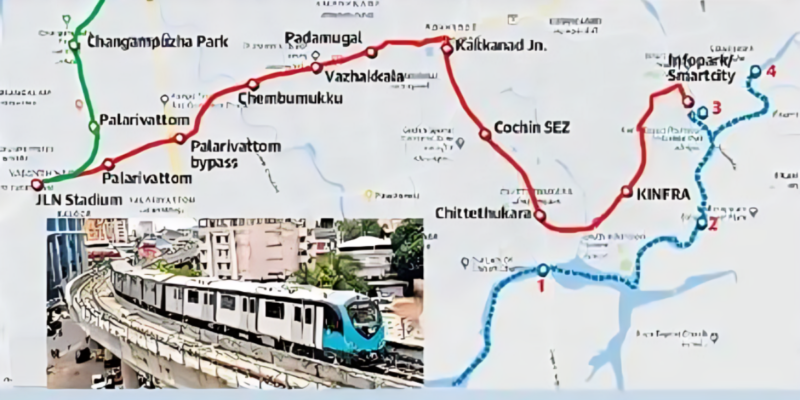
Kochi Metro new line (Pink Line) will enhance connectivity, boost property values, and spur commercial growth – making metro-linked areas as prime investment hubs for the city’s urban development.
Kerala’s financial, commercial, and industrial capital is moving closer to a future-ready urban network with the ongoing metro expansion, aimed at reducing travel time and easing road congestion. Phase II of the project (Pink Line) is making steady headway, with completion targeted for December 2026.
Kochi Metro new line will connect Jawaharlal Nehru Stadium to Infopark via Kakkanad, strengthening the city’s public transport backbone. JLN Stadium is already on the existing Phase I line, that connects Aluva in the north to Tripunithura in the south of the city.
Metro connectivity plays a key role in driving sustainable urban development, supporting economic growth, and improving daily commuting for residents. This blog explores the areas benefitting from Kochi Metro, highlighting which neighbourhoods will gain the most in terms of infrastructure value and future real estate prospects.
Table of Contents
Kochi Metro: Current Status and Expansion
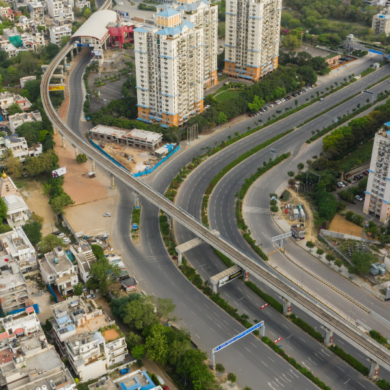
Kochi Metro route 2025 currently spans 28 km, with 25 elevated stations strategically placed across key neighbourhoods. The next major addition is Phase II, also called the Pink Line. It will link Jawaharlal Nehru Stadium to Infopark via Kakkanad, covering 11 stations that directly connect residential clusters, IT corridors, and business hubs.
Scheduled to commence operations by the end of 2026, this stretch will significantly improve last‑mile connectivity and daily commuting convenience. Looking ahead, Phase III will extend the metro network from Aluva to Angamaly, offering a vital link to Cochin International Airport. KMRL is evaluating two possible alignments – one from Athani Junction to Angamaly with a branch to the airport, and another directly via the airport.
A feasibility study is also planned, to explore extending the line further to Ayyampuzha. Together, these developments underline the government’s vision for a fully integrated metro system, resulting in multiple areas benefitting from Kochi Metro and redefining the city’s future of urban mobility.
5 Key Benefits of Kochi Metro Expansion
This expansion is set to transform daily life by reducing travel time, improving accessibility, and encouraging sustainable urban growth. Beyond enhancing connectivity, it will influence property values, local businesses, and the overall lifestyles in metro-linked neighbourhoods.
- Reduced traffic congestion: Metro connectivity reduces dependency on private vehicles, diverting a significant share of daily commuters from road transport. This reduction in vehicular load minimises bottlenecks at busy junctions, creating smoother travel experiences for both metro and road users.
- Increased property values: Properties near Kochi Metro new line will gain higher appreciation due to enhanced convenience. This makes metro-linked areas attractive for investors and homebuyers, contributing to sustained real estate demand.
- Boost to commercial and retail development: The growth of metro corridors spurs retail, hospitality, and office spaces around stations. Improved footfall around key stops enables businesses to thrive, adding vibrancy and economic activity to urban pockets.
- Environmental benefits: By reducing carbon emissions from vehicles, metro supports cleaner air and a more sustainable city. It aligns with the government’s vision of creating eco-friendly urban transport systems for future-ready cities.
- Improved connectivity to key employment hubs: With proximity to IT parks, business centres, and industrial zones, metro saves commuting time for working professionals. Neighbourhoods connected by Kochi Metro route 2025 will witness rising demand from employees seeking convenient living options.
Top 8 Areas Benefitting from Kochi Metro
-
Kaloor
A prominent junction in the city, Kaloor is known for the iconic Jawaharlal Nehru Stadium that hosts major cricket and football tournaments. The upcoming station, part of the 11 planned stations on Pink Line, will make this well-connected locality even more accessible.
With direct metro connectivity, residents, officegoers, and visitors attending events at the stadium will experience seamless travel without road congestion. Being close to key roads like Banerji Road and Kaloor-Kadavanthra Road, and housing major institutions like IGNOU and media offices, Kaloor is poised to see higher commercial activity and improved real estate demand with Kochi Metro expansion.
-
Palarivattom Junction and Bypass
This area serves as one of the city’s busiest transit points – linking key city roads, Mumbai Kanyakumari National Highway NH66, and arterial routes towards major residential and commercial areas. The upcoming Pink Line will feature dedicated stations here, strengthening its role as an essential interchange on Kochi Metro route 2025.
With seamless metro connectivity, both the Junction and Bypass will experience reduced congestion, enabling faster movement between the city core and upcoming areas. This improved connectivity due to Kochi real estate metro impact will attract retail outlets, office spaces, and mixed‑use developments – and increase rental demand and property appreciation for spaces near the station.
-
Chembukku
The upcoming station will improve connectivity to IT parks, and educational institutions like Rajagiri College and Bhavans Vidya Mandir. Healthcare will also improve, with leading hospitals such as Ernakulam Medical Centre and Sunrise Hospital becoming easier to reach. As one of the areas benefitting from Kochi Metro, Chembukku is set to attract more families and professionals, driving demand for housing.
-
Vazhakkala
This rapidly developing area is positioned close to Kakkanad. The metro station planned here will make commuting seamless to leading educational institutions like Cochin University of Science and Technology and Govt Model Engineering College, which are just 10‑15 minutes away.
Lulu Mall, Kerala’s premier shopping destination, is also 10-15 minutes away, adding to the lifestyle convenience. Vazhakkala is expected to see rising property values, better rental demand, and strong Kochi real estate metro impact – making it a hotspot for both living and investment.
-
Kakkanad Junction
This area is an important traffic node linking key city roads, government offices at Civil Station, Seaport-Airport Road, and Cochin Special Economic Zone. With the Pink Line introducing a metro station here, residents and officegoers will enjoy smoother connectivity to major institutions and nearby residential areas.
The junction provides connectivity to educational centres like Rajagiri School of Engineering & Technology, and healthcare facilities such as Sunrise Hospital. Enhanced connectivity will reduce road congestion, attract more retail and small commercial establishments, and improve rental demand – strengthening the overall Kochi real estate metro impact in this high-potential locality.
-
Chittethukara
Strategically located near Kakkanad, this is one of the areas benefitting from Kochi Metro. With its proximity to key IT and industrial hubs, Chittethukara is expected to attract professionals seeking convenient housing. Kochi Metro expansion will not only enhance daily commuting, but also boost small-scale retail activity – driving the real estate market of this fast-developing locality.
-
Cochin SEZ and KINFRA
Cochin Special Economic Zone and KINFRA Industrial Park are vital business clusters that house numerous manufacturing, logistics, and service industries. The station here will significantly improve last-mile connectivity for employees and visitors, reducing traffic bottlenecks around these hubs.
This enhanced connectivity will encourage more investments in industrial and commercial spaces. With better transport links, the surrounding areas will see rising housing demand – resulting in excellent Kochi real estate metro impact for both investors and developers.
-
Infopark Phase 1 and SmartCity Phase 1
These are the core IT hubs of the city, employing thousands of professionals. Dedicated Pink Line metro stations here will directly connect these campuses to residential and commercial neighbourhoods across Kochi, ensuring faster and more sustainable commuting.
With improved public transport, the demand for rental housing, co-living spaces, and supporting retail outlets is expected to surge. Kochi Metro route 2025 will therefore play a key role in strengthening the ecosystem of the IT corridor, while enhancing its real estate value.
Investment and Real Estate Implications
Kochi Metro expansion is reshaping the urban landscape, making metro-linked neighbourhoods highly attractive for both families and investors. Properties near upcoming Pink Line stations are expected to appreciate further, driven by improved accessibility and reduced travel time for daily commuters.
Significant developments are already emerging along the corridor. KMRL is actively seeking investors to develop over 31 acres at Kakkanad SEZ into Bliss City – a mixed‑use project with offices, hospitals, and entertainment hubs – showcasing strong confidence in the growth potential of metro-linked real estate. Similarly, a tender for 19,600 sq ft of commercial land near Kaloor Metro Station signals rising demand for retail and office spaces around high-footfall locations.
For investors, Kochi real estate metro impact creates exciting opportunities in rental housing, co-living spaces, and commercial establishments. Businesses can benefit from higher visibility and customer flow, while developers gain an edge in creating mixed‑use projects. Overall, the Pink Line is set to generate a ripple effect of growth, positioning areas along Kochi Metro route 2025 as future-ready investment hotspots.
Also Read: Marina One New Towers’ Launch: Your Gateway to Ultra-luxury Waterfront Living in Kochi
Challenges to Consider
- Project delays or cost escalations: Metro construction timelines may extend due to funding or technical hurdles, affecting planned development schedules
- Temporary disruption during construction: Road diversions and ongoing work can cause short-term inconvenience for residents and businesses
- Pricing concerns in high-demand pockets: Rising demand near metro stations may push property prices beyond the reach of some homebuyers
Conclusion
Under Kochi Metro expansion, the Pink Line will transform key neighbourhoods such as Kaloor, Palarivattom, Chembukku, Vazhakkala, Kakkanad, Chittethukara, Thrikkakkara, Cochin SEZ, and IT hubs like Infopark and SmartCity. Enhanced accessibility will reduce commuting time, boost commercial activity, and trigger property appreciation along Kochi Metro route 2025.
With mixed‑use projects like Bliss City and commercial leasing near Kaloor Station already underway, metro-linked areas are set to become thriving investment zones. Now is the right time to explore opportunities in these high-growth pockets and secure long-term returns from properties near Kochi Metro new line.
FAQs
1. What is the route and timeline for the new Kochi Metro line?
The route for the new Kochi Metro line is from Jawaharlal Nehru Stadium Kaloor to Infopark via Kakkanad with 11 stations, and the timeline for this east-west line is commissioning by end of 2026.
2. Which areas in Kochi will see the most benefit from the metro expansion?
Areas in Kochi that will see the most benefit from the metro expansion include Kaloor, Palarivattom, Chembukku, Vazhakkala, Thrikkakkara, Kakkanad, Chittethukara, Cochin SEZ, Infopark, and SmartCity.
3. How will the new metro line impact real estate prices in Kochi?
The new metro line will impact real estate prices in Kochi positively, by driving appreciation near Pink Line stations and boosting both residential and commercial demand due to improved connectivity.
4. Is it a good time to invest in properties near upcoming Kochi Metro stations?
Yes, it is a good time to invest in properties near upcoming Kochi Metro stations, as early buyers can benefit from lower prices before demand peaks and large projects like Bliss City add more value.
5. Will Kochi Metro improve connectivity to IT hubs like Kakkanad and InfoPark?
Yes, Kochi Metro will improve connectivity to IT hubs like Kakkanad and InfoPark, by introducing dedicated Pink Line stations.
6. How does metro connectivity influence rental demand in Kochi?
Metro connectivity influences rental demand in Kochi positively, by attracting professionals and families seeking convenient housing near stations, ensuring consistent returns for property owners.
7. What are the commercial development opportunities along the new metro line?
Commercial development opportunities along the new metro line include retail hubs, office spaces, and hospitality projects at high-footfall stations like Kaloor and Kakkanad.
8. How will the new metro line impact daily commuting times in Kochi?
The new metro line will impact daily commuting times in Kochi, by reducing road congestion and making travel between key hubs like Kaloor and Kakkanad faster and more reliable.
9. Are there any government policies or incentives for metro corridor development in Kochi?
There are government policies for metro corridor development in Kochi, such as KMRL initiatives to lease commercial land and invite private investors for mixed-use projects along metro stations.
10. What type of properties (residential or commercial) will benefit more from the metro expansion?
Types of properties that will benefit from the metro expansion are commercial spaces near high-footfall stations, and residential properties that will see steady appreciation and rental demand.