


Is Bangalore Getting too Expensive? An Honest Look at Whether Property Prices Have Peaked.


Bangalore property prices have risen sharply, and the key question now is whether the city has become too expensive or whether the right locations still justify the price.
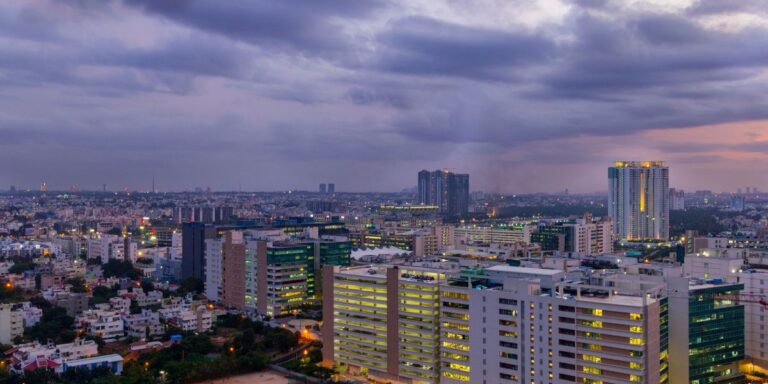
Over the past decade, Bangalore has grown from India’s Silicon City into a high-value housing market. Tech hiring, startup valuations, metro expansion, scarce land in key zones, and rising construction costs have all pushed prices higher.
This shift raises a practical question for today’s homebuyer: should I buy property in Bangalore now? This article examines what makes it costlier, and whether current values & long-term ROI still make it worth buying here.
Table of Contents
Understanding the Current Trend
Bangalore property prices have moved up sharply in the past 3 years, reflecting the tech-led expansion and a new phase of urban improvement. Anarock notes that average housing prices rose by 63% during this period, which shows how significantly market sentiment has shifted.
Today, real estate prices Bangalore in prime IT corridors stand at ₹15,000 to ₹18,000 per sq ft. This range signals higher purchasing power, better mobility, and interest from professionals, families, NRIs, and HNIs.
What is Driving the Real Estate Price Rise?
Property price trends Bangalore reflect more than rising market interest. The city continues to attract high-income talent from the IT and startup ecosystem; this strong earning base keeps the purchase intent active in many key zones.
Metro expansion and broader infrastructural upgrades have enabled faster travel to work clusters, impacting how people value emerging areas and established corridors.
Residences in prime locations remain limited, which keeps choice restricted in neighbourhoods that draw the highest attention. At the same time, steel, cement, labour, and compliance costs have all moved upwards – pushing launch values higher.
Are Bangalore Property Prices Really Too High?
The city has undeniably become costlier for home seekers, as the recent rise has outpaced Mumbai at 48% and Pune at 59% – which shows that Bangalore is moving through a different phase. The bigger concern lies in income growth not keeping pace with home values. That gap makes property investment Bangalore a more selective decision, especially for those entering the market for the first time.
Careful budget planning matters more in this phase. Mid-premium homes still leave room for entry, while top-end segments have become costlier.
Have Bangalore Property Prices Peaked or Will They Continue Rising?
Knight Frank ranked the city 4th among 46 global cities, for prime housing appreciation, with 10.2% rise in this segment. New launches also show that purchase interest remains active. Cushman and Wakefield Marketbeat Bengaluru Residential Q1 2026 report recorded 12,664 units, up by 4% on both quarterly and annual basis. East Bangalore accounts for 57% of launches – through Whitefield, Gunjur, Budigere Cross, and Hoskote.
Metro connectivity is adding more momentum. Bangalore real estate market forecast 2026 shows housing demand is rising by 19% near metro station zones, with Rajajinagar seeing 13% rise, Jayanagar 11%, Electronic City 12%, and Bommanahalli 8% – which depicts how faster travel is shaping residential values.
So, will Bangalore property prices fall in 2026? Current trends suggest that luxury flats in Bangalore may continue to appreciate, especially in well-connected locales where interest remains steady and infrastructure upgrades are still unfolding.
Best Areas Where Prices Still Offer Value in Bangalore
North continues to gain traction due to airport-led expansion and faster infrastructural upgrades. Hebbal averages ₹9000 to ₹13,000 per sq ft; with its appeal coming from seamless connectivity to tech parks and the international airport. Yelahanka stands at ₹6500-9000 per sq ft, attracting those who seek broader range with more choice.
Priced at ₹7500 to ₹11,000 per sq ft, Hennur Road is also seeing interest as new roads, daily conveniences, and airport-side pull continue to improve its appeal. Hoskote is experiencing a surge, due to its strategic equidistance between North & East and increasing interest in flats for sale in Bangalore’s emerging areas.
East remains one of the most active regions, as major work hubs continue to shape buying patterns here. Sarjapur Road has taken the lead with average prices ranging from ₹7200 to ₹10,500 per sq ft, and it has recorded 79% rise in just 3-4 years. Whitefield stands at ₹7500 to ₹11,000 per sq ft and continues to draw attention from those who seeking established neighbourhood close to tech hubs.
With diverse values of ₹6000 to ₹9000 per sq ft, Electronic City is gaining from Yellow Line and work-driven pull. Bannerghatta Road is gaining prominence, and the flats in Bangalore price range here is drawing attention due to social infrastructure.
Should You Wait or Buy Now, in Bangalore Real Estate?
Values have continued to move upwards in many active neighbourhoods instead of easing. Delaying a purchase can therefore mean entering later at a higher base, especially in locales where infrastructural development and work hubs are still shaping demand.
The city still remains relevant for those considering residential acquisition with medium to long-term ownership perspective. Bangalore real estate may feel high today, yet early entry in the right locality can still ensure excellent ROI over time.
A more practical approach is to focus on value, timing, and suitability instead of waiting for a perfect entry point. Better outcomes usually come from choosing the right home at the right budget, and then giving that decision enough time to mature.
Smart Buying Strategies in a Luxury Market

The right purchase starts with finalising the budget and accordingly choosing the configuration, locale, project, and developer.
Larger layouts may appear appealing, but the wiser choice is one that suits household needs without placing pressure on monthly commitments. Bangalore housing market 2026 is favouring areas that show potential for further price rise. That makes corridor selection important, especially where metro reach, airport-side movement, or tech employment continue to shape demand.
Bangalore property prices also make developer selection more important than before. Construction standards, delivery record, layout efficiency, Karnataka RERA compliance, and legal clarity should all be checked carefully before taking a decision.
Financial comfort matters as much as location. Balanced down payment, well-planned EMIs, and comfortable monthly cash flow can keep the purchase manageable even in the luxury segment.
Is Bangalore Still Worth Investing in?
Bangalore property prices still reflect a city that is moving through an active value-building phase. Strong tech-led demand, metro-led expansion, and limited choice in prime neighbourhoods continue to support this direction.
For individuals and families looking to buy flats in Bangalore, the focus should stay on the right locality, the right budget, and the right developer – with long-term ownership plan. The city may feel costlier today, yet its economic base and urban upgrades continue to keep it investment-worthy. A well-timed purchase in the right corridor can create meaningful value.
FAQs
Are property prices in Bangalore too high in 2026?
Property prices in Bangalore are high in 2026, but they continue to rise with prime IT corridors at ₹15,000 to ₹18,000 per sq ft and 63% appreciation in the last 3-4 years.
Will Bangalore property prices fall in the near future?
No, Bangalore property prices are unlikely to fall in the near future, as the city recorded 10.2% rise in prime segment and high interest in metro-linked locations.
Is it good time to buy property in Bangalore now?
Yes, 2026 is a good time to buy property in Bangalore – due to metro expansion, airport-side upgrades, and work-hub demand.
Is Bangalore real estate a good long-term investment?
Yes, Bangalore real estate is a good long-term investment – due to strong economic base, airport-side traction, India’s second largest metro network, and steady demand in major work-driven zones.
How does infrastructure impact Bangalore property prices?
Infrastructure impacts Bangalore property prices by improving travel time and making more areas desirable, which is visible in metro-linked locations where housing demand rose by 19%.
Should first-time buyers wait for prices to drop?
No, first-time buyers should not wait for prices to drop, as prime neighbourhoods have kept moving upwards and delayed purchase can push entry to a higher base.
What is the average price per sq ft in Bangalore?
The average price per sq ft in Bangalore is ₹15,000 to ₹18,000 in prime IT corridors – which can vary depending on location, configuration, developer, and other parameters.
Are premium apartments overpriced in Bangalore?
Premium apartments in Bangalore are not uniformly overpriced, as top-end homes have become costlier, but mid-premium options remain approachable depending on locality and budget.
Which factors influence property appreciation in Bangalore?
Factors that influence property appreciation in Bangalore include tech-led demand, metro expansion, limited land in sought-after areas, road upgrades, and more interest around major IT & startup hubs such as ORR, Sarjapur Road, Hosur Road, and Koramangala.
How to take a smart property investment decision in Bangalore?
A smart property investment decision in Bangalore can be taken by choosing the right configuration, fixing a workable budget, selecting an upcoming neighbourhood, checking developer record & legal clarity, and keeping EMI & down payment comfortable.
Why are Bangalore property prices increasing?
Bangalore property prices are increasing due to high interest from IT & startup professionals, metro network, infrastructure upgrades, limited choice in prime locales, and steel / cement / labour / compliance costs.
You might also like