



PMC vs PCMC: What Pune Homebuyers Should Know About Jurisdiction, Property Tax, & Approvals


Explore how property tax, approvals, and jurisdiction vary under PMC vs PCMC before buying a home in Pune.
Pune Municipal Corporation (PMC) and Pimpri-Chinchwad Municipal Corporation (PCMC) administer separate jurisdictions across the city – which means building permissions, tax structure, service responsibilities, and statutory procedures vary by location.
Knowing the distinction between PMC vs PCMC helps homebuyers identify the correct civic body, confirm sanctioned plans, trace pending dues, and verify completion-related queries.
The difference becomes especially relevant while reviewing PMC vs PCMC property tax, since each follows its own calculation method and payment system. This article gives the clarity required to evaluate legal compliance, financial commitments, and transaction readiness.
Current Pune real estate registrations and price data provide wider market context, while jurisdiction determines the formalities attached to a specific location.
Table of Contents
PMC vs PCMC: Who Governs What in Pune
The official administrative boundary of a site determines which civic body supervises construction approvals, tax, water supply, sanitation, fire services, and street upkeep.
| Aspect | Pune Municipal Corporation (PMC) |
Pimpri-Chinchwad Municipal Corporation (PCMC)
|
| Primary coverage | Covers Pune’s core urban areas along with major western, eastern, and southern residential belts within PMC limits |
Covers Pimpri-Chinchwad and major north-western parts of the Pune metropolitan region, including prominent residential and industrial belts
|
| Major areas under the civic body | Shivajinagar, Deccan, Kothrud, Karve Nagar, Aundh, Baner, Pashan, Hadapsar, Mundhwa, Kharadi, Viman Nagar, Yerawada, Dhanori, Kondhwa, Bibwewadi, and Dhankawadi, among others |
Pimpri, Chinchwad, Akurdi, Nigdi, Bhosari, Wakad, Tathawade, Punawale, Ravet, Kiwale, Moshi, Chikhali, Dighi, Charholi, Thergaon, Pimple Saudagar, and Pimple Nilakh, among others
|
| Tax administration | Determines assessments, collects dues, and maintains tax-related details for premises within its jurisdiction |
Follows its own assessment, collection, transfer, and tax-account procedures for premises within its limits
|
| Construction and planning approvals | Evaluates building plans, commencement permissions, occupancy-related submissions, and development proposals falling under its jurisdiction |
Handles corresponding building permissions and planning submissions for developments within Pimpri-Chinchwad limits
|
| Civic administration | Manages water supply, drainage, waste management, roads, fire services, and area-level municipal functions |
Manages these functions independently through its departments and administrative zones
|
Those comparing the best areas to buy a flat in Pune should confirm which civic body their shortlisted locales fall under, since applicable formalities vary by administrative limit.
How to Check Whether Your Property Falls Under PMC or PCMC
The following 5 steps explain how to check if property is under PMC or PCMC through official entries and location-specific information.
- Check the Property Tax Bill: Review the civic body named on the latest property tax receipt to identify the applicable jurisdiction
- Verify the Address on Official Records: Search the property details on the relevant municipal portal, to confirm whether the address appears under PMC or PCMC
- Refer to the Survey, CTS, or Gat Number: Match the number mentioned in the property documents with the corresponding municipal or planning records, to confirm whether the property falls under PMC or PCMC
- Review the Sanctioned Building Documents: Check the authority named on the sanctioned plan, commencement certificate, or occupancy certificate, where applicable
- Confirm with the Ward or Zonal Office: If the jurisdiction is still unclear, verify the details with the concerned ward / zonal office
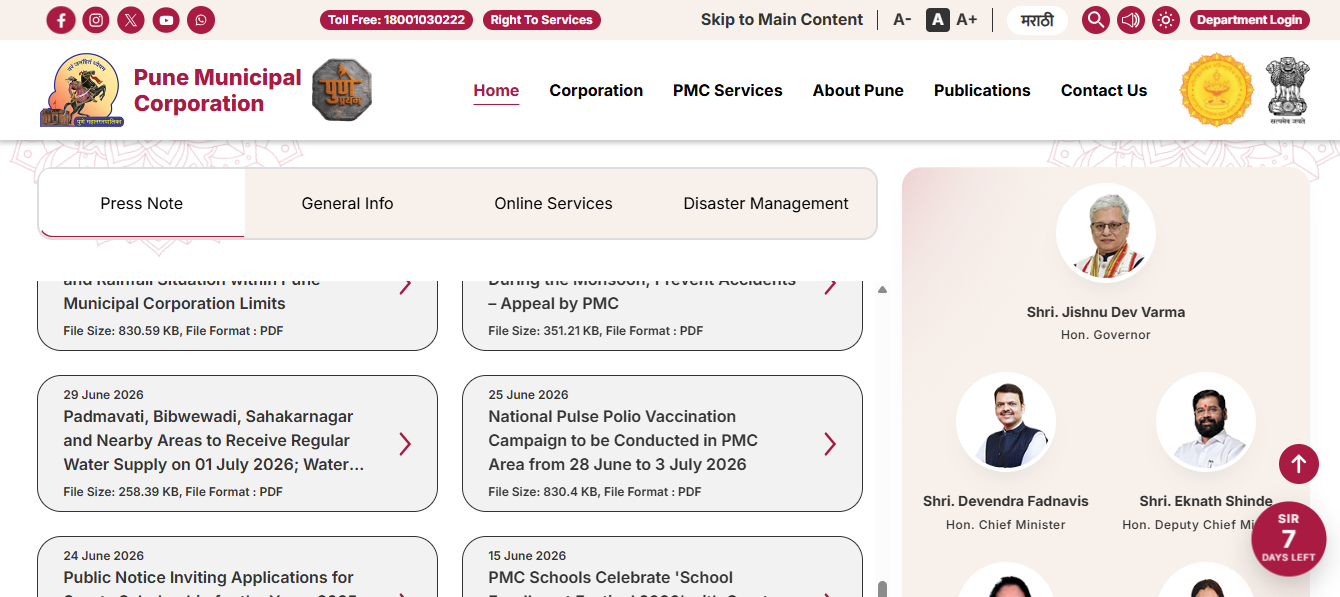
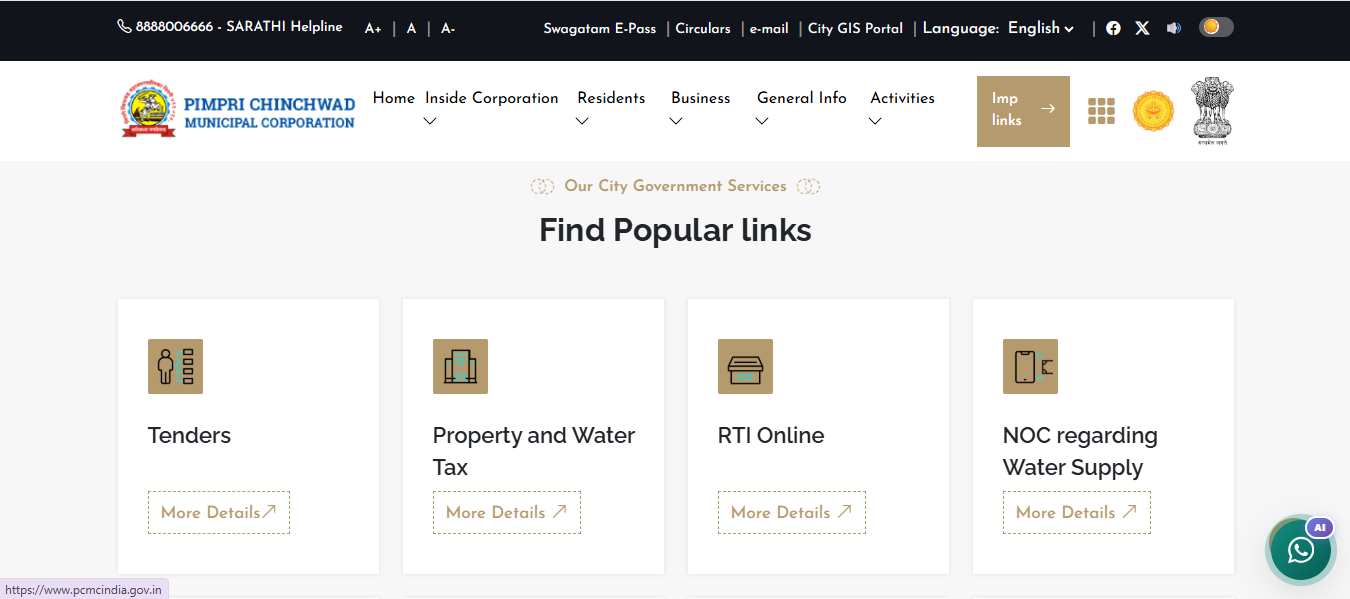
Property Tax: Why the Two Corporations Do not Calculate it the Same Way
The tax payable on a residence can differ depending on the municipal jurisdiction in which it falls. Understanding property tax calculation Pune PMC PCMC helps homeowners see how the two corporations apply different valuation methods, to determine the annual amount.
How PMC Computes Property Tax
PMC follows the Capital Value System (CVS). It first calculates the capital value using the built-up area, base value, age factor, usage factor, and floor factor. The annual tax is then charged at the applicable percentage of this value.

Capital Value = Built-up Area × Base Value per sq ft × Age Factor × Usage Factor × Floor Factor
Annual Property Tax = Capital Value × 0.374%
How PCMC Computes Property Tax
PCMC follows the Unit Area Value (UAV) System, where the calculation is linked to the built-up area and the annual unit value assigned to the relevant zone. The usage factor is then applied to determine the yearly PCMC property tax rate.
Annual Property Tax = Built-up Area × Unit Area Value per sq ft per year × Usage Factor
Rebates, Concessions and Payment Timelines
PMC divides the annual property tax into two half-year periods. For the first half, covering 1 Apr-30 Sep, full payment by 31 May qualifies for 5% or 10% rebate. The second-half amount, covering 1 Oct-31 Mar, is due by 31 Dec.
Delayed first-half payments attract 2% monthly penalty. Existing arrears carry 2% monthly penalty, and delayed government levies may attract 1% notice fee.
PCMC grants concessions under specific eligibility categories and financial-year rules. Since payment-linked benefits may carry fixed deadlines, owners should verify the latest PCMC notice or tax bill for the applicable concession and due date.
Building Approvals: Who Sanctions What, and Why it is Important at Resale
Understanding PMC vs PCMC helps a homeowner trace validated layouts and occupancy clearance to the correct civic body during a secondary sale.
The Approval Chain, from Layout Sanction to Occupancy Certificate
The PMC PCMC building approval process follows these 5 stages:
- Plan scrutiny: The proposed plot arrangement and building drawings undergo evaluation
- Commencement permission: The developer receives clearance to begin construction
- Plinth verification: Officials examine the work completed up to plinth level
- Completion submission: The architect files the required compliance details
- Occupancy clearance: The corporation issues part or full permission for occupancy
During a subsequent sale, the approved floor plan, commencement permission, and occupancy status should relate to the same proposal and project. A clear understanding of how to check Occupancy Certificate online in Pune helps establish whether the occupancy clearance applies to the specific tower, wing, and phase being examined.
FSI, Development Rules, and What They Mean for the Property You Buy
For homebuyers assessing FSI in PMC and PCMC Pune, the indicative FSI / FAR range is 1.0-4.0, with the permissible figure depending on the site and applicable planning provisions. Development rules also govern setbacks, building height, road-width requirements, parking, open spaces, fire safety provisions, and the use of TDR or premium FSI.
The difference between PMC and PCMC in Pune should therefore be reviewed through the sanctioned plan and the development regulations applicable to the specific site. These provisions influence how much can be constructed, how buildings are positioned on the plot, and the overall density of the development.
PMC or PCMC: How to Decide Which Suits Your Purchase
For buyers wondering PCMC vs PMC which is better to buy, the answer depends on workplace proximity, budget, neighbourhood preference, and investment goals.
Who Should Choose PMC?
Core city living may suit professionals working in Kharadi, EON IT Park, and Magarpatta, along with homebuyers drawn to established areas such as Kothrud, Baner, Koregaon Park, and Aundh. Kothrud also benefits from convenient access towards key PCMC belts, making it well placed for families seeking connectivity across both jurisdictions.
Who Should Choose PCMC?
Pimpri-Chinchwad may suit professionals working in Hinjawadi, investors prioritising rental returns, and buyers seeking more space within their budget. It can also appeal to those interested in newer, large-format residential developments with extensive amenities.
Jurisdiction Checklist Before You Pay the Booking Amount
- Confirm the survey or Gat number: Match the no., revenue village name, and plot details across the booking form and approved plan
- Identify the responsible corporation: Review the property tax receipt to establish whether PMC or PCMC handles the premises
- Examine the sanctioned drawings: Ensure the tower, wing, floor, and flat no. appear in the permitted proposal
- Trace the commencement permission: Verify that construction began under a valid commencement certificate issued for the relevant phase.
- Review the occupancy status: Confirm whether the specific building has received full or part occupancy clearance
- Match MahaRERA particulars: Compare the survey details, area, developer name, and completion schedule with the registered information
Alongside these verifications, stamp duty and registration charges in Pune should form part of the total acquisition outlay.
Buying in Pune: Where Jurisdiction Suits Your Decision
The difference between PMC and PCMC in Pune can impact tax assessment, building permissions, civic services, and the authority handling later formalities.
Homebuyers comparing the most developing areas in Pune should verify the revenue village, survey or gat number, ward, and governing civic body through official sources. Matching these details with sanctioned plans, occupancy status, and outstanding dues can reduce procedural issues after acquisition.
Whether a residence falls under PMC vs PCMC, valid approvals and accurate records remain central to due diligence. Investors, professionals, and families can then explore flats in Pune with greater clarity.
FAQs
Is PCMC part of Pune Municipal Corporation?
No, Pimpri-Chinchwad Municipal Corporation (PCMC) is not part of Pune Municipal Corporation (PMC). The difference between PMC and PCMC in Pune begins with their status as separate urban administrations.
Which areas come under PCMC in Pune?
Areas under PCMC include Pimpri, Chinchwad, Akurdi, Nigdi, Bhosari, Wakad, Tathawade, Punawale, Ravet, Kiwale, Moshi, Chikhali, Dighi, Charholi, Thergaon, Pimple Saudagar, Pimple Nilakh, and more.
Is property tax lower in PCMC than in PMC?
The property tax difference PMC PCMC comparison depends on factors such as location, area, usage, valuation, and the assessment method followed by the respective corporation.
What is PMRDA, and how is it different from a municipal corporation?
PMRDA is a regional planning authority responsible for development plans, zoning, transport, and permissions in designated parts of Pune Metropolitan Region, while PMC and PCMC administer municipal services, taxation, and governance within their respective limits. The difference between PMC and PCMC in Pune concerns two urban corporations, while PMRDA performs a regional planning role.
What are the merged villages in PMC?
The 23 villages merged into PMC in 2021 are Mahalunge, Sus, Bavdhan Budruk, Kirkatwadi, Pisoli, Kondhwe-Dhawade, Kopare, Nanded, Khadakwasla, Manjari Budruk, Narhe, Holkarwadi, Autade-Handewadi, Wadachiwadi, Shewalewadi, Nandoshi, Sanasnagar, Mangdewadi, Bhilarewadi, Gujar Nimbalkarwadi, Jambhulwadi, Kolewadi, and Wagholi.
Who issues the Occupancy Certificate in PCMC?
PCMC’s Building Permission Department issues the Occupancy Certificate after verifying that the completed construction complies with the sanctioned plan and applicable regulations. PMC PCMC Completion Certificate Occupancy Certificate verification should confirm that the clearance applies to the relevant building, wing, or phase.
How do I find my property tax ID in Pune?
The property tax ID appears on previous bills and receipts, or the owner can retrieve it through PMC’s property tax website using the mobile number registered against the premises.
Are stamp duty and registration charges different in PMC and PCMC?
Stamp duty and registration charges follow Maharashtra Government rules and do not differ just because an asset falls under PMC or PCMC, although the payable amount may vary with the applicable Ready Reckoner value, transaction value, purchaser category, and statutory concessions. The difference between PMC and PCMC in Pune mainly concerns administrative limits, construction permissions, taxation systems, and public services.
Does jurisdiction change my electricity or water connection provider?
Yes, jurisdiction determines whether PMC or PCMC handles water supply, while it does not confirm a change in the electricity provider. The PMC vs PCMC distinction is relevant for water-related services and associated formalities.
You might also like


