

From Industrial to Iconic: How Wadala Is Becoming Mumbai’s Most Strategic Investment Zone
November 30th, 2025
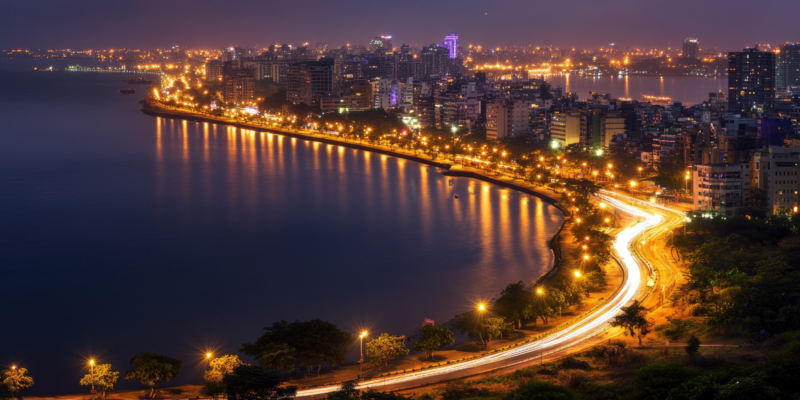
Wadala’s central position between South Mumbai, BKC, and Chembur has made it one of the most strategic zones for future-ready living. For buyers exploring luxury apartments in Mumbai, it now stands out as a location where long-term appreciation aligns with modern infrastructure.
Though a familiar name on Mumbai’s map since decades, Wadala was not on the top of the homebuying shortlist. Shaped by salt pans, dock-linked warehousing, and institutional campuses, the area carried an industrial identity since long.
It stayed in the background while neighbouring pockets like Dadar, Sion, and Chembur grew into established residential zones. That perception began to shift, when large infrastructure projects and redevelopment plans started reshaping the area’s role within MMR (Mumbai Metropolitan Region).
This blog shows how this transformation has made it one of the most strategic locations for anyone exploring to buy apartments in Mumbai.
Table of Contents
The Wadala Most People do not Know: A Timeline of Transformation
Archival maps from the late 1800s show extensive salt pans and railway yards across this belt, forming part of the logistical spine that connected Sewri, King’s Circle, and Harbour Line. This industrial identity explains why it historically saw lower residential density compared to Dadar or Sion, even though it was centrally located.
The establishment and expansion of educational and institutional facilities marked the first wave of demographic modernisation. By the early 2000s, Anik-Wadala link road and municipal restructuring of mill and port lands signalled that the area was entering a new development cycle.
The turning point arrived between 2008 and 2014, when 3 major transport projects positioned Wadala at the centre of a new urban grid:
- Eastern Freeway: Opened in 2014, it reduced travel time to South Mumbai, to 20 mins
- Monorail Phase 1: Operational since 2014, it anchored the depot and interchange at Wadala
- BKC-Chunabhatti Connector prepared the corridor for seamless East-West movement
The Golden Triangle: Wadala’s Strategic Location
- South Mumbai Reach: Eastern Freeway lies a short drive from Wadala, offering one of the fastest road links to South Mumbai compared to other central areas
- Bandra Kurla Complex: BKC-Chunabhatti Connector provides a direct elevated connection between the area and Mumbai’s largest CBD
- Chembur Connectivity: Wadala benefits from quick connectivity to Chembur via arterial roads
- Central Axis Advantage: The area is situated between major arterial networks – EEH, Freeway, and Wadala-Sion belt – enabling multidirectional mobility
Centrality and strong access to commercial districts support steady Wadala property appreciation.
Diverse factors collectively place it among the most strategically aligned areas for long-term demand, from buyers exploring apartments in Mumbai.
How Did Wadala Shift from Industrial to Residential?
The points below highlight how Wadala moved from a port-linked industrial belt to a centrally connected residential cluster.
- Transport Networks: Key road upgrades such as BKC-Chunabhatti Connector, Eastern Freeway, Eastern Express Highway, and Sion-Chembur corridor have created faster, more reliable movement to key areas of the city – strengthening the demand for apartments in Mumbai
- Transit Hubs: Wadala’s monorail hub, Harbour Line connectivity, and upcoming Metro Lines 4 and 11 form a rare multimodal transit cluster that enhances commute efficiency for those looking to buy flats in Mumbai central region
- Civic and Social Infrastructure: Institutional campuses, upgraded civic systems, improved lighting, redesigned junctions, and recreation pockets have improved lifestyles
The New Identity of Wadala: From Warehouses to High-rise Luxury Gated Communities
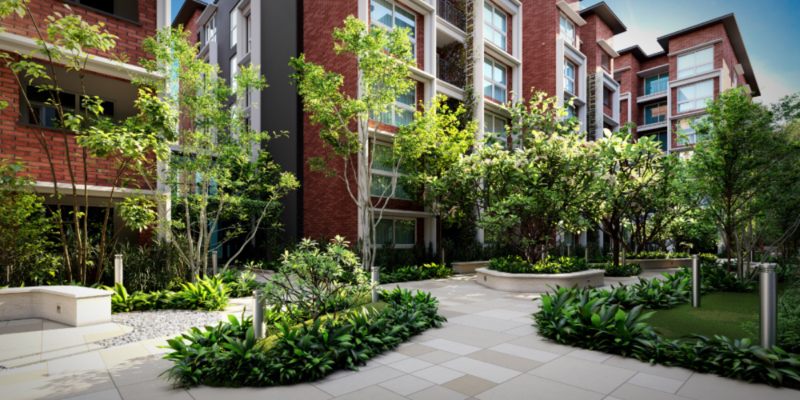
As Mumbai’s industrial functions decentralised and port-led warehousing reduced, these land parcels became eligible for structured renewal – opening the door for modern residential planning. Today, flats in Wadala are designed with landscaped podiums, glass facades, and integrated wellness architecture. New-age homebuyers are choosing the area for the following reasons:
- High-rise gated communities with elevated podiums and well-planned internal layouts
- Wellness-first amenities such as jogging tracks, sports facilities, and landscaped courts
- Better pedestrian experience across internal streets and community spaces
- Neighbourhood upgrading driven by institutional clusters and improving civic facilities
Investment Logic: What Makes Wadala a Strategic Zone for 2025-2032
Wadala real estate market continues to command stable property values, with average rates in the ₹22,000-30,000 per sq ft range. This positions the area between mid-tier Chembur pricing and the upper-tier Sion-Matunga belt, helping it attract long-horizon buyers assessing apartments in Mumbai.
Central location, controlled supply conditions, and infrastructure-led demand collectively shape Wadala’s strategic outlook for 2025-2032 – strengthening its position as a noteworthy zone for buyers seeking long-term value potential. Those exploring homes here also consider apartments in Mumbai located in Dadar, Parel, Worli, and more.
The Lifestyle Leap: Schools, Hospitals, Culture & Recreation
Convenience Culture
Wadala has quietly developed into one of the most effortless convenience ecosystems in Mumbai, shaped by its position between Dadar, Sion, and Chembur – 3 areas that naturally pull strong retail activity.
This geography has allowed locales in Wadala – such as Dosti Acres, Bhakti Park, Antop Hill, and Wadala East – to mature into self-contained pockets where supermarkets, pharmacies, grooming studios, and high-street essentials sit within easy walking radius, clearly illustrating how are infrastructure upgrades changing Wadala.
Cafes, Gyms, Art & Cultural Corners
Proximity to Matunga – one of Mumbai’s most vibrant cultural hubs – brings within reach iconic south Indian cafes, bookshops, and institutions like Shanmukhananda Hall. This influence has shaped the rise of boutique gyms, Pilates studios, training centres, and contemporary cafes – reflecting the lifestyle impact created by Wadala new infrastructure.
Educational Clusters
The cluster of Matunga-Sion-Antop Hill is one of Mumbai’s densest zones of educational institutions – resulting in high demand for apartments in Mumbai located in these areas. Wadala is surrounded by:
- Institute of Chemical Technology (ICT): Established in 1933 as UDCT, it is one of the oldest chemical engineering institutes in India
- Vidyalankar Institute of Technology
- Don Bosco High School, Matunga
- R A Podar College
- Ruia College
- Guru Nanak Khalsa College
- St. Joseph’s High School, Wadala
- Auxilium Convent High School
Healthcare Access
Major established hospitals are just a short drive away, creating a well-established medical belt that strengthens convenience for people exploring apartments in Mumbai.
- LTMG / Sion Hospital
- Tata Memorial Hospital, Parel
- KEM Hospital, Parel
- Asian Heart Institute, BKC
Wadala vs Traditional Central Mumbai Areas: Who Wins?
Wadala vs Dadar for Families
This table helps you understand why the area differs from Dadar’s dense, activity-heavy environment.
| Factor | Wadala | Dadar |
| Family Environment | Calmer residential pockets with new high-rise gated communities and organised layouts | High-density, busy neighbourhood with continuous activity and limited quieter zones |
| School Proximity | ICT, St. Joseph’s High School, Don Bosco Wadala, Vidyalankar | Ruia College, Podar College, Balmohan School, Don Bosco Matunga |
| Connectivity Advantage | Quick access to Eastern Freeway, Monorail, and central belt via Sion & Matunga | Western + Central Railway hub, but high congestion during peak hours |
Wadala vs Chembur for Infrastructure
This table highlights the core infrastructure differences between Wadala and Chembur.
| Factor | Wadala | Chembur |
| Major Road Connectivity | Eastern Freeway and BKC-Chunabhatti Connector improve accessibility of housing projects in Wadala | Well-connected through Sion-Panvel Highway and Eastern Express Highway, offering strong links towards Navi Mumbai and Central Mumbai |
| BKC Connectivity | Faster reach to BKC due to the dedicated elevated corridor | Longer travel window to BKC, depending on EEH and surface junctions |
| South Mumbai Reach | Direct access to South Mumbai via Eastern Freeway | Access depends on surface routes via Sion or EEH, making it comparatively slower |
Wadala vs Sion for Long-term ROI
This table outlines the investment fundamentals influencing long-term ROI in both areas.
| Factor | Wadala | Chembur |
| Redevelopment Scope | High, supported by port-land access; which strengthens its appeal for buyers tracking future-ready apartments in Mumbai | Moderate; dense built-up fabric limits possibilities for large-scale redevelopment |
| Future Infrastructure Impact | Benefits from Metro Lines 4 & 11, along with upcoming infrastructure upgrades | Gains from central connectivity, but does not have major new infrastructure projects |
| Rental Demand Pattern | Strong, due to proximity to BKC, Lower Parel, and academic institutions in the Matunga-Sion belt | Stable, but predominantly driven by family and student clusters |
The 2030 Vision: What Wadala Will Become in the Next Decade
Metro Line 4
This under-construction 32km corridor with 30 stations connects the area to Thane, Bhandup, Mulund, and eastern suburbs. This line is expected to strengthen reach across the eastern growth belt significantly, enhancing long-term appeal for those exploring apartments in Mumbai.
Wadala’s Commercial Push
MMRDA recently invited bids for a high-FSI commercial plot of nearly 2 acres, offering development potential of 108,600 sq m of built-up area. This move comes as BKC’s land bank approaches saturation, driving institutional attention towards Wadala as the next large-format commercial cluster within Mumbai redevelopment corridors.
Conclusion
For buyers exploring apartments in Mumbai, Wadala offers a central location where connectivity upgrades work in tandem with long-term urban planning. Proximity to Eastern Freeway, Eastern Express Highway, metro corridor, and emerging commercial activity enhances its relevance within MMR – making it one of the most future-ready upcoming residential zones in Mumbai.
Those looking to buy apartment in Mumbai in luxury gated communities with curated amenities consider Wadala and other areas nearby – such as Dadar, Parel, and Lower Parel.
FAQs
Why is Wadala suddenly in high demand for real estate?
Wadala is suddenly in high demand for real estate, due to major infrastructure upgrades such as Eastern Freeway, BKC-Chunabhatti Connector, and upcoming metro lines.
Is Wadala considered the next major residential hub in Mumbai?
Yes, Wadala is considered the next major residential hub in Mumbai – due to seamless connectivity, redevelopment potential, and proximity to large-scale projects.
How did infrastructure change Wadala’s real estate outlook?
Infrastructure such as Eastern Freeway, Monorail, and BKC Connector sharply reduced commute times, changing Wadala’s real estate outlook.
What makes Wadala a strategic investment zone today?
Wadala is a strategic investment zone today, because of its position between key business hubs and the scale of nearby redevelopment.
Are Wadala’s upcoming projects ideal for long-term investment?
Yes, Wadala’s upcoming projects are ideal for long-term investment – due to strong connectivity upgrades, access to major transit corridors, and limited new supply in the central belt.
How have property prices changed in Wadala over the last decade?
Property prices have recorded steady appreciation in Wadala over the last decade, supported by infrastructure growth and reduced travel times. Price momentum remains tied to ongoing connectivity upgrades.
Is Wadala suitable for families in terms of schools, hospitals, and amenities?
Yes, Wadala is suitable for families, due to strong access to academic clusters, tertiary care hospitals, fitness centres, cafes, and retail outlets.
Are there luxury or premium apartment options in and around Wadala?
Yes, there are luxury and premium apartment options in and around Wadala East and West, with modern amenities and strong connectivity.
What is the rental demand like in Wadala?
Rental demand in Wadala is strong due to proximity to BKC, Lower Parel, and major educational institutions – making it one of the important areas when it comes to real estate investment in Mumbai.
Is Wadala suitable for families in terms of schools, hospitals, and amenities?
Yes, Wadala is suitable for families, due to strong access to academic clusters, tertiary care hospitals, fitness centres, cafes, and retail outlets.
What are the leading residential projects near Wadala right now?
Wadala East and West have multiple high-rise and township-style developments – that focus on connectivity, modern amenities, and central-city accessibility.
Which upcoming metro lines or transport upgrades will impact property demand in Wadala?
Metro Line 4 (that connects to Mira Road and Thane), and Metro Line 11 (that connects to CSMT and Gateway of India) will impact property demand in Wadala.
Which types of homebuyers prefer Wadala?
Professionals working in BKC, Lower Parel, and the central areas prefer buying homes in Wadala.
How have property prices changed in Wadala over the last decade?
Property prices have recorded steady appreciation in Wadala over the last decade, supported by infrastructure growth and reduced travel times. Price momentum remains tied to ongoing connectivity upgrades.
Are Wadala’s upcoming projects ideal for long-term investment?
Yes, Wadala’s upcoming projects are ideal for long-term investment – due to strong connectivity upgrades, access to major transit corridors, and limited new supply in the central belt.